Local Gems
Explainer: How Blue Plaques Work and Why They Mark Interesting Places
Walk down almost any high street in Britain and you will pass history without noticing it. A blue plaque is the smallest and cheapest kind of monument. It needs no ticket office, no car park, no staff — just a wall and someone worth remembering. The flat above the chip shop may once have been home to a poet. The office that is now a dentist's was perhaps where a suffragette planned a march.
So how does a building earn a plaque, who decides, and what should you do when you spot one?
Where the idea started
Commemorative plaques on houses go back further than most people assume. The first was put up in London in 1867 by the Society of Arts — later the Royal Society of Arts — to mark Lord Byron at a house in Holles Street, just off Oxford Street. That building was demolished long ago, and the plaque went with it, which tells you something about how fragile this kind of memorial is.
The London County Council took over the scheme in 1901, and over the following decades it settled on the design we now picture: white lettering on a blue ground, neat and rather formal. The Greater London Council carried it on from 1965, and English Heritage has run the London scheme since 1986.
Early plaques came in other colours and shapes — brown, red, even green — which is why a plaque's style is often a clue to its age. It also explains why people argue about what "proper" blue plaques look like when there is no rulebook at all.
A blue plaque is not what you might think
For a start, "blue plaque" is not a protected term. Plaques are erected by councils, civic societies, universities, museums, hotels, pubs, employers and private individuals. Some are green, some brown, some cast in bronze or cut from stone. No national register decides who is worthy.
Second — and this catches people out — a plaque is not a listed building designation or any kind of legal protection. It does not open a house to the public, oblige an owner to maintain anything, or stop a building being altered or sold. It is an acknowledgement, nothing more, and it is usually fixed to a private home or a working business.
Who gets one
Under the English Heritage scheme for London, the bar is deliberately high. The usual tests are:
- the person has been dead for at least twenty years
- they are considered eminent, with a lasting contribution behind them
- the building they are linked to still stands and is recognisably the one they knew
- the connection to that building is genuine and documented, not a rumour
- the wall in question is visible from the public highway
- as a rule, only one plaque per person in London
That last point trips up well-meaning campaigners. EmInence is also judged with some flexibility: the plaques to Handel and Jimi Hendrix sit a few doors apart on Brook Street in Mayfair, two composers separated by two centuries and almost every other measure you could name.
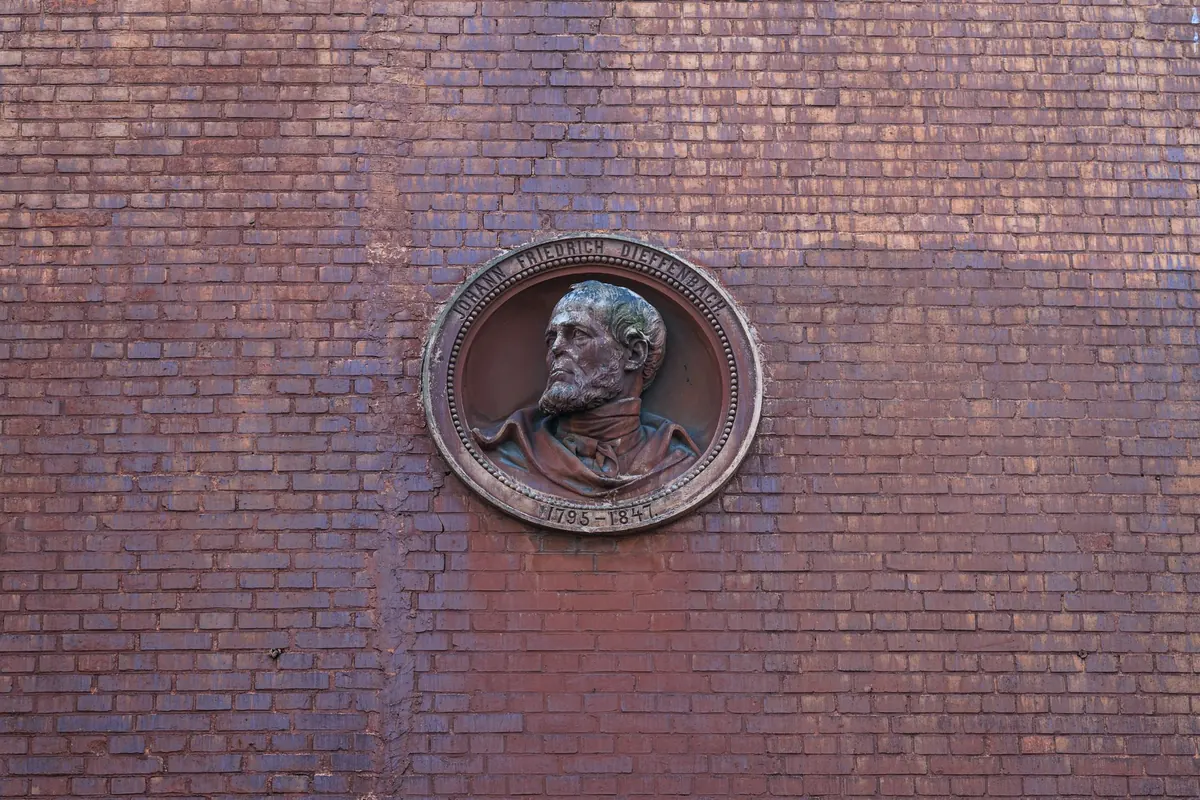
A typical inscription is spare. It gives a name, dates, a one-line description of what the person did, and the words "lived here". Everything else is left to the passer-by.
A name. Two dates. Four or five words of description. Then: lived here.
How a nomination actually works
Schemes differ, but the process in London runs roughly like this:
- Check whether the person already has a plaque — in London, elsewhere in the country, or on a building that no longer exists.
- Confirm the building survives and that the link is real. Birth, residence and workplace all count; a single overnight stay rarely does.
- Gather evidence. Biographies, census returns, electoral rolls, letters, newspaper archives and local studies libraries are the usual sources.
- Send the nomination to whoever runs the scheme: English Heritage for London, or the relevant civic society, council or heritage trust elsewhere.
- Wait for research and a decision. In London a panel of historians considers nominations, and there is no fixed timetable — a successful case can take years.
- Sort out payment and permission if it is approved. Funding arrangements vary between schemes, and the building's owner has to agree, because the plaque goes on their wall.
That last stage is where many good nominations stall. If you are serious about a candidate, it helps enormously to have the owner on side before you start.
Outside London, the rules change
Most of the plaques you see around British towns come from local schemes rather than a national one, and their criteria are their own. Some ask for a shorter period since death. Some commemorate events and lost buildings as well as people. Many are happily parochial: a wartime mayor, a pioneering headteacher, the founder of a factory that once employed half the town, a nurse who stayed behind during an epidemic.
Some towns have several schemes running at once, in different colours, with no connection between them. If a specific plaque intrigues you — the wording is odd, the person obscure — the local studies library or county archive is the place to ask. Volunteers there usually know exactly who put it up and why.
Plaque-spotting etiquette
A few habits make you a good visitor rather than a nuisance:
- Look up. Plaques usually sit at first-floor height on the street-facing wall, not the side wall, and not always near the door.
- Keep off private ground. A plaque on a house is not an invitation to knock, cross the garden or peer through windows.
- Leave the pavement clear. Many are on narrow streets. Step to the kerb only when it is safe to do so.
- Do not touch or rub. Enamel and brass mark and scratch easily, and cleaning attempts often do more harm than good.
- Photograph from across the street. You get the whole plaque square-on and avoid glare. Cloudy light beats bright sun, which washes out white lettering on blue.
- Mind your volume. These are residential streets, often on Sunday mornings.
- Report damage. If a plaque is cracked, loose or defaced, tell the organisation named on it.
Finding plaques near you
English Heritage publishes a searchable list for London, and most local schemes list theirs online. The volunteer-run Open Plaques map covers plaques across the country and beyond, which makes it useful for planning a route rather than just checking one address.
Then it is simply a matter of picking a street and walking it slowly. A plaque trail is a good way to learn a town you have just moved to, and a good excuse to take a longer way round on an ordinary errand. If you keep noticing someone who ought to be remembered, do not leave it to somebody else: nominations usually come from members of the public, and every scheme depends on people who bother to look up.
Photo: Alexander Popadin / Pexels
Related Articles